Blog

White Box. Grey Box. Black Box.

White Box. Grey Box. Black Box.

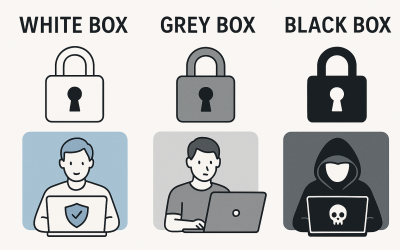
Three approaches. Three levels of visibility. One mission: understand your real exposure before an adversary does.

White Box gives full transparency — architecture, credentials, source code. It’s the fastest path to deep, surgical insight into systemic weaknesses and design flaws.

Grey Box mirrors a modern attacker with partial knowledge. Limited intel, targeted access, and a realistic view of how quickly a foothold becomes a compromise.

Black Box simulates a true external adversary. No internal context. No assumptions. Just raw reconnaissance, exploitation attempts, and a clear picture of what your perimeter really looks like under pressure.

Expose The Blind spots

Expose The Blind spots

External penetration testing exposes the blind spots attackers target first—your internet‑facing systems. By simulating real‑world adversaries, you uncover vulnerabilities before they become breaches, validate your security controls under pressure, and gain a clear, prioritized roadmap for hardening your perimeter. Whether you’re preparing for compliance, protecting customer data, or strengthening your overall security posture, an external pentest delivers the clarity and confidence your organization needs to stay ahead of evolving threats.

Where Social Engineering Meets Real‑World Defense

Attackers don’t break in through firewalls anymore—they walk right through people. Social engineering is the modern intrusion vector, and phishing is the delivery system that never stops evolving. SocketPulse treats it as the frontline, not an afterthought.